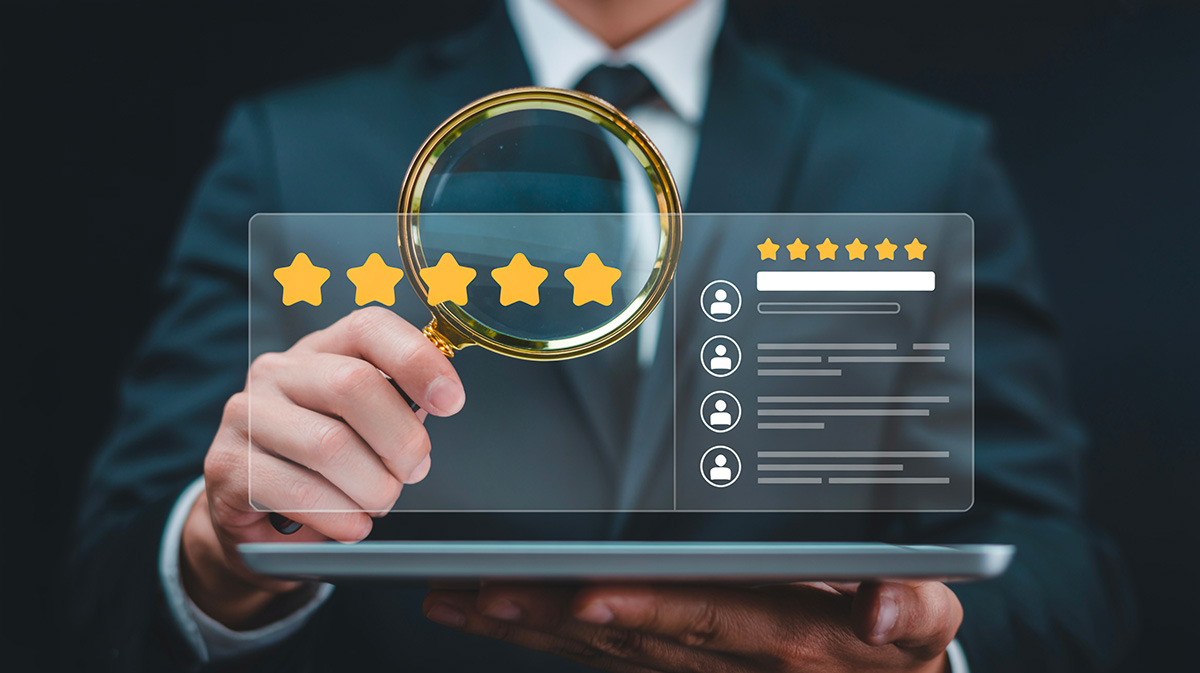
How to Spot Fake Reviews Online
Online reviews have become one of the most powerful tools consumers and businesses rely on to make decisions. But what happens when those reviews are not genuine? Fake reviews are more common than most people realize, and they can mislead customers, hurt honest businesses, and undermine the trust that makes online platforms valuable. In this article, we'll help you identify the telltale signs of fraudulent reviews and show you what you can do about them.
Why Do Fake Reviews Exist?
The first reason is the most obvious: some businesses pay for positive reviews to boost their reputation. Whether it's a restaurant on Tripadvisor, a product on Amazon, or a local shop on Google Maps, a flood of glowing reviews can make any business look trustworthy, even if the reality is very different.
Another common motivation is to hurt competitors. A business owner might post, or pay someone to post, negative reviews on a rival's page in order to drive customers away. This is especially prevalent in highly competitive industries like hospitality and local services.
Finally, there's a growing industry of paid reviewers and review farms. These are individuals or organizations that produce fake reviews at scale, often for a few dollars each. Some reviewers also receive free products in exchange for five-star reviews, which blurs the line between genuine feedback and advertising.
The Telltale Signs of a Fake Review
While fake reviews are getting more sophisticated, there are still several red flags you can look for. The first is vague or generic language. A genuine review typically mentions specific details: a dish they ordered, a feature they liked, or a particular interaction with staff. Fake reviews tend to be either overly enthusiastic ("Best place ever! Amazing experience!") or overly negative ("Terrible. Worst experience of my life.") without providing any real context.
The second sign is the reviewer's profile. On platforms like Yelp or Facebook, you can usually see a reviewer's history. If someone has only ever posted one review, or if they posted dozens of five-star reviews in a single day, that's a strong indicator that something is off. Real reviewers tend to have a varied history over time.
Another clue is timing patterns. If a business suddenly receives a large number of positive reviews in a short period, especially after a wave of negative ones, it's likely that they've purchased reviews to offset the damage. Similarly, a competitor attack often shows up as a cluster of one-star reviews appearing within hours.
Lastly, watch out for reviews that read like marketing copy. Real people don't usually include brand slogans, full product names, or links to a company's website in their reviews. If a review sounds more like an advertisement than a personal experience, it probably is one.
The Real Impact of Fake Reviews
Fake reviews are not just an annoyance: they have real consequences. For consumers, they lead to poor purchasing decisions, wasted money, and sometimes even safety risks. Imagine choosing a contractor based on glowing reviews, only to discover that none of those reviewers actually hired them.
For honest businesses, the damage can be even worse. A small business that plays by the rules can lose customers to a competitor who bought hundreds of five-star reviews. And when fake negative reviews pile up, they can destroy a reputation that took years to build. As we explored in our article on reviewing bad customers, the review ecosystem is only fair when all parties are held accountable.
On a broader level, fake reviews erode trust in the entire online review system. When people can no longer tell which reviews are real, they stop trusting any of them, which defeats the purpose of having reviews in the first place.
What Can You Do About It?
The first and simplest step is to report suspicious reviews on the platform where you found them. Most major review sites have reporting tools, and while they don't always act quickly, flagging fake content helps improve their detection systems over time.
You can also cross-reference reviews across multiple platforms. If a business has hundreds of five-star reviews on one site but mediocre ratings elsewhere, that's a sign that something doesn't add up. Checking a reviewer's activity across platforms can also reveal patterns of fraudulent behavior.
But perhaps the most effective long-term solution is to hold reviewers themselves accountable. That's exactly the idea behind Rebolio. Our platform doesn't just let you rate customers and rate influencers: it also lets you rate the reviewers themselves.
Rating the Reviewers: A Better Way Forward
Think about it: on most platforms, reviewers are essentially anonymous and unaccountable. They can post whatever they want, whether it's truthful or not, with zero consequences. But what if reviewers had a reputation of their own?
That's the principle behind Rebolio's reviewer ratings. You can search for reviewers from platforms like Yelp, Tripadvisor, Google Maps and Facebook, and leave a review about their credibility. If a reviewer consistently posts fake or misleading content, other users can flag it by giving them a low Trust Score.
This creates a system where reviews of businesses, customers, and influencers can be evaluated in context. A five-star review from a reviewer with a high Trust Score carries far more weight than one from someone with a history of suspicious activity. It's about adding a layer of transparency that the current review ecosystem is missing.
If you've encountered fake reviewers on any platform, we encourage you to create a free account and start rating them. The more people participate, the harder it becomes for fake reviews to go unnoticed. Together, we can build a review ecosystem that's fairer and more trustworthy for everyone.
Know a Suspicious Reviewer?
Rate them on Rebolio!
Help others by rating reviewers you've come across on platforms like Yelp, Tripadvisor or Google.
Browse ReviewersRebolio in Numbers
- 4126 members
- 59 reviews
- 63 customers
- 1127 influencers
- 346 reviewers
Did You Know?
53% of consumers expect a business to respond to their review within 7 days.
Join the Review-lution!
Create a free account and start rating customers, influencers, and reviewers.
Sign Up Free